The Republic’s Ideal of Equality for All
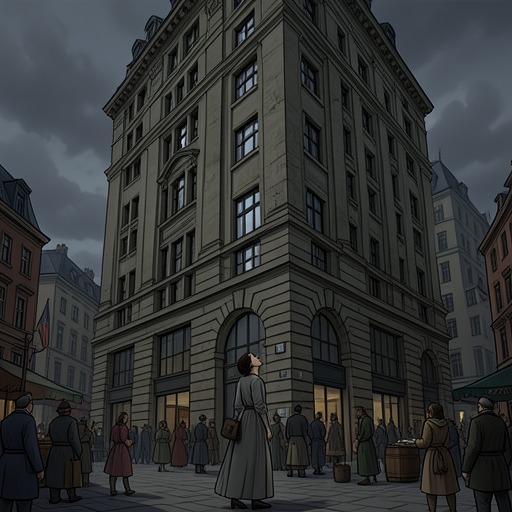
Small Things Like TheseThe Republic’s Ideal of Equality for All is the standard of civic and moral equality against which the novel measures both Ireland’s treatment of vulnerable women and children and the choices of those who encounter their suffering. Introduced through the epigraph from the Proclamation of the Irish Republic (1916), its promise that the nation will cherish all its children equally becomes pointedly discordant with the institutions and social habits revealed in the story. The ideal is not merely commemorative language: it asks whether equality exists in practice when some children and mothers can be hidden, separated, and denied protection, and whether ordinary people will act when they recognize that failure.
The Promise in the Epigraph
The epigraph presents a broad civic pledge: religious and civil liberty, equal rights, equal opportunities, and a national commitment to the happiness and prosperity of the whole country. Its final insistence on cherishing all the children of the nation equally gives the novel a particular measure of responsibility. The claim encompasses children as members of a shared political community, not as dependants whose worth can be determined by their mothers’ marital status or by the convenience of respectable society.
The dedication makes the relation between this ideal and the book’s subject explicit. The story is dedicated to women and children who suffered in Ireland’s mother-and-baby homes and Magdalen laundries. The epigraph’s promise and the dedication’s acknowledgment of suffering therefore stand beside one another: the first states what a nation says it owes everyone, while the second remembers people for whom that protection was absent. Equality is presented as a test of actual treatment, rather than a virtue established simply by declaring it.
Institutions and the Gap Between Principle and Practice
The convent’s public standing shows how the gap can be obscured by ordinary respectability. The Good Shepherd Sisters run a training school and a laundry whose work is valued by restaurants, guesthouses, a nursing home, a hospital, priests, and prosperous households. Its linen is reputed to return as good as new. This reputation makes the institution useful to the town and gives its work a visible, approved face; it does not establish what happens to the girls who perform that work.
Rumour offers competing accounts, but several accounts describe girls working from dawn until night, doing penance through laundry labour, or being confined after giving birth. One report concerns a fifteen-year-old treated for varicose veins caused by standing so long at wash-tubs. Talk also describes unmarried girls being hidden away and their babies adopted abroad, including by wealthy Americans, or sent to Australia. The novel preserves the uncertainty of what townspeople say, while making the existence of the stories itself significant: the community hears allegations of injury and separation, yet the laundry’s trusted service continues to benefit local institutions and households.
The account of the institutions in the note on the text gives the conflict a historical scale beyond the fictional plot. Ireland’s last Magdalen laundry did not close until 1996; the note says that ten thousand confined women and girls is a modest estimate, while thirty thousand is probably more accurate, and that records were destroyed, lost, or made inaccessible. It also reports that the Mother and Baby Home Commission found nine thousand children had died in eighteen investigated institutions. In 2014, historian Catherine Corless publicized the finding that 796 babies died at the Tuam home between 1925 and 1961. The note states that these institutions were run and financed by the Catholic Church in concert with the Irish State, and that the Irish government did not apologize for the Magdalen laundries until 2013. These facts set the ideal of equal care against structures sustained over time, as well as against the later difficulty of documenting and acknowledging what happened.
Social Responsibility and the Choice to Act
The novel connects public principle to the more immediate pressure of social conformity. After Bill Furlong tells Eileen Furlong what he has witnessed at the convent, she argues that the matter has nothing to do with them and that there is nothing they can do. She points to the girls’ need for warmth and to the nuns’ reliable payment for coal, contrasting that reliability with other customers who leave debts on the slate. Her response registers the practical dependencies of a household business, but it also shows how concern for one’s own security can turn another person’s distress into someone else’s problem.
Eileen’s warning that Furlong was raised far from hardship makes privilege part of the question. The point is not that he lacks the capacity to understand need, but that relative security can make deprivation easier to regard as distant. At the convent, the Mother Superior says that there are so many girls nowadays and that finding a place for everyone is no easy task. Against this administrative language of numbers and capacity, a girl asks Furlong to inquire about her baby. She says that her fourteen-week-old son has been taken from her, that he must be hungry, and that she does not know where he is. The mother’s concrete fear makes the general question of equal care immediate: the child singled out by institutional separation is one of the nation’s children too.
Small Acts and the Ideal’s Measure
Furlong’s intervention gives the epigraph’s principle a practical, risky form. When he finds the girl sitting dazed at the table while a young nun prepares food, those in the convent expect him to continue on. Instead, he pauses beside her and offers help. The gesture does not undo the system or resolve the separation from her baby, but it interrupts the expectation that he will leave without responding. The ideal of equality here becomes an obligation to recognize a person’s claim to care even when institutions and social convention make refusal easier.
As he walks on with the girl, Furlong asks himself whether a person can live through a whole life without being brave enough to oppose what is wrong and still call himself a Christian. He remembers Mrs Wilson’s kindness and reflects that without it his own mother might have ended up in such a place. That recollection makes vulnerability neither an abstraction nor a condition belonging only to strangers: his own family history could have taken another course. The ideal’s force lies in this recognition, and in the change from pity at a distance to responsibility toward the person beside him.
The closing reflection does not claim that one act repairs the damage or guarantees safety. Furlong knows he will pay for his decision, yet experiences a happiness he has never known before. The contrast between anticipated cost and newfound joy gives the civic promise an intimate ending: equality is not fulfilled by noble wording alone, but brought closer when someone accepts a consequence rather than leave another person unaided. The historical note prevents that ending from becoming a claim of easy resolution; its evidence of deaths, lost records, and delayed apology keeps the larger failure in view.